Table of contents
- Darwin, 1835: The Islands That Changed the World
- Floreana Island: From Abundance to Absence
- The Hybrid Discovery That Made Restoration Possible
- Why This Is a Major Galapagos Conservation Milestone
- Why Giant Tortoises Live So Long
- Seeing Restoration in Real Time on an Expedition Cruise
- Luxury Expedition Cruise Itineraries That Visit Floreana
- Floreana’s Human Dimension
- FAQ
- Why is Floreana important in Galapagos history?
- Why are giant tortoises so long-lived?
- What does “rewilding” mean in Galapagos?
- Which expedition cruises visit Floreana? - A New Chapter in Evolution
Giant tortoises return to Galapagos on Floreana Island nearly two centuries after whalers erased them from its volcanic slopes. In February 2026, 158 juvenile tortoises stepped back onto ancestral ground, marking one of the most significant chapters in modern Galapagos conservation. For travelers sailing on a small-ship expedition cruise, this is not simply wildlife news. It is history unfolding in real time.
Darwin, 1835: The Islands That Changed the World
When Charles Darwin arrived in the Galapagos in 1835 aboard HMS Beagle, he could not have predicted that these islands would permanently alter humanity’s understanding of life on Earth. Observing subtle differences among mockingbirds, finches, and giant tortoises from island to island, Darwin began forming ideas that would later shape the theory of evolution by natural selection.
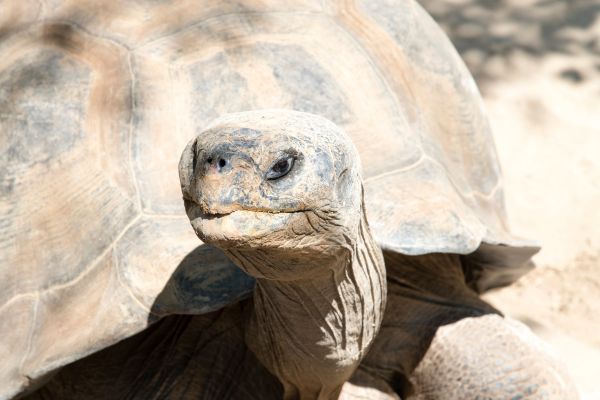
The tortoises were especially revealing. Their shell shapes varied depending on habitat and vegetation height. Domed shells thrived in lush highlands; saddleback shells evolved where food grew higher above the ground. Geography shaped anatomy. Isolation drove divergence. Evolution was not abstract. It was visible.
Today, Floreana Island stands at the center of that evolutionary narrative. To witness giant tortoises return to Galapagos on the very island Darwin once explored is to see science complete a circle.
.jpg?alt=media&token=14b1c778-ff2b-44ef-9e9e-d25fd02b4b6b)
Floreana Island: From Abundance to Absence
Two centuries ago, an estimated 20,000 giant tortoises roamed Floreana Island. They were easy targets for whalers and pirates who valued them as a living food supply. By the mid-1800s, the Floreana tortoise lineage was gone from the island.
The ecological consequences were profound. Giant tortoises are ecosystem engineers. Without them, invasive plants expanded unchecked. Native scalesia forests declined. Ground-nesting birds suffered. Introduced goats, pigs, rats, and cats further destabilized the landscape. What had once been a living laboratory of evolution became an ecosystem under siege.
The creation of Galapagos National Park in 1959 marked a turning point. Yet restoring Floreana would take decades of coordinated effort involving eradication of invasive species, habitat recovery, and genetic research.
The Hybrid Discovery That Made Restoration Possible
In 2008, scientists surveying tortoises on Wolf Volcano on Isabela Island made an unexpected discovery. Among the domed shells were saddleback tortoises carrying genetic traces of the extinct Floreana lineage. Historical records suggest that whalers, moving tortoises between islands, inadvertently preserved fragments of Floreana DNA.
Through careful breeding programs led by conservation scientists and the Galapagos National Park, offspring carrying significant Floreana ancestry were raised. The 158 juveniles released in 2026 represent the first phase of a long-term plan that could see hundreds eventually reintroduced.
This is not “de-extinction.” It is rewilding informed by genetics, ecological science, and adaptive management.
Why This Is a Major Galapagos Conservation Milestone
The return of tortoises to Floreana is not symbolic. It is functional.
As ecosystem engineers, giant tortoises:
-
Disperse seeds across wide distances
-
Create natural clearings through grazing
-
Shape plant communities through selective feeding
-
Establish microhabitats through movement patterns
Their slow, deliberate presence restructures landscapes. Early signs are promising. Native birds are rebounding. Agricultural harvests on Floreana have improved following invasive species control. The island’s trajectory is shifting.
If successful, Floreana may become a template for restoration across the archipelago and beyond.
Why Giant Tortoises Live So Long
Few creatures inspire awe quite like a giant tortoise that may live more than a century. Their longevity is not mystical. It is biological.
Giant tortoises evolved in predator-free environments. With minimal natural threats, there was little evolutionary pressure for rapid reproduction or short lifespans. Instead, they developed:
-
Slow metabolisms that conserve energy
-
Gradual growth rates
-
Efficient cellular maintenance mechanisms
-
Thick shells providing substantial protection
Their physiology favors endurance over speed. In stable ecosystems, slow life histories can be advantageous. The same traits that once allowed them to thrive undisturbed now support long-term restoration efforts.
Their longevity also reinforces the ethical dimension of Galapagos conservation. A tortoise released today may outlive generations of visitors.
Seeing Restoration in Real Time on an Expedition Cruise
Floreana remains one of the least visited inhabited islands in the archipelago. Access is regulated, landings are structured, and interpretation is led by certified naturalists. This is where small-ship travel becomes essential.
On a luxury Galapagos cruise operating under Galapagos National Park guidelines, guests experience:
-
Guided hikes at Punta Cormorant
-
Snorkeling at Devil’s Crown
-
Historical context at Post Office Bay
-
Insight into rewilding initiatives and biosecurity protocols
An expedition cruise is not passive sightseeing. It is immersive field education. Naturalists connect Darwin’s observations with modern genetic science. They explain invasive species eradication strategies. They frame each landing within broader ecological narratives.
Responsible travel plays a role in sustaining conservation funding and local livelihoods. The relationship between tourism and preservation in the Galapagos is deliberate and tightly managed.
Luxury Expedition Cruise Itineraries That Visit Floreana
If you want Floreana to feel like a living conservation chapter, choose an itinerary that pairs it with expert-led context. On M/C Anahi, Floreana is not a checkbox stop, it is woven into a route designed for wildlife immersion and informed interpretation.
For a deeper arc across iconic islands, the 8-day journey layers Española, Genovesa, and Floreana with hikes, snorkeling, and kayaking that build understanding day by day. If time is tight, the 4-day option delivers a concentrated southern classic with Floreana’s defining sites and a strong natural-history rhythm.
Both routes reward travelers who want more than scenery: they deliver perspective, through landscapes that shaped Darwin’s questions and still challenge modern science. Explore the full day-by-day plans to see exactly how each landing, hike, and snorkel session fits together.
Choose your itinerary and view the full program:
-
8 Days Eastern Islands (M/C Anahi): Española + Genovesa + Floreana, including Punta Cormorant, Devil’s Crown, Post Office Bay, and more
-
4 Days Itinerary C (M/C Anahi): A refined short expedition featuring Española and Floreana with high-impact wildlife encounters
Floreana’s Human Dimension
About 200 residents live on Floreana Island. Many are farmers whose harvests once suffered under invasive species pressure. Restoration has improved agricultural yields and strengthened community resilience.
Rewilding here is not exclusionary conservation. It integrates human presence with ecological recovery. Workshops, biosecurity training, and sustainable development initiatives accompany species reintroduction.
The return of giant tortoises return to Galapagos is as much about coexistence as it is about biodiversity.
FAQ
Why is Floreana important in Galapagos history?
Floreana was one of the first settled islands and visited by Charles Darwin in 1835. Its tortoises contributed to early observations that informed evolutionary theory. It also became a focal point of ecological loss and now restoration.
Why are giant tortoises so long-lived?
They evolved in predator-free environments with slow metabolisms and gradual growth rates. Energy efficiency, protective shells, and stable ecosystems contribute to exceptional longevity.
What does “rewilding” mean in Galapagos?
Rewilding refers to restoring native species and ecological processes. On Floreana, it includes invasive species eradication and reintroducing tortoises to rebuild ecosystem function.
Which expedition cruises visit Floreana?
Several small-ship expedition cruise itineraries include Floreana, particularly eastern and southern routes aboard luxury catamarans with certified naturalist guides.
A New Chapter in Evolution
When Darwin left the Galapagos, he carried ideas that would reshape science. Today, as giant tortoises return to Galapagos on Floreana Island, the story continues. Evolution is no longer only about adaptation. It is also about restoration.
For travelers who seek more than scenery, who value context as much as comfort, witnessing this milestone from the deck of a thoughtfully operated expedition cruise is profound. Floreana offers something rare: not pristine wilderness frozen in time, but a living ecosystem actively healing.
To explore expedition cruise itineraries that include Floreana Island and to plan a journey aligned with conservation values, contact us.